
Mold Remediation in Rockville, MD: Taking Out Mold Material by Material
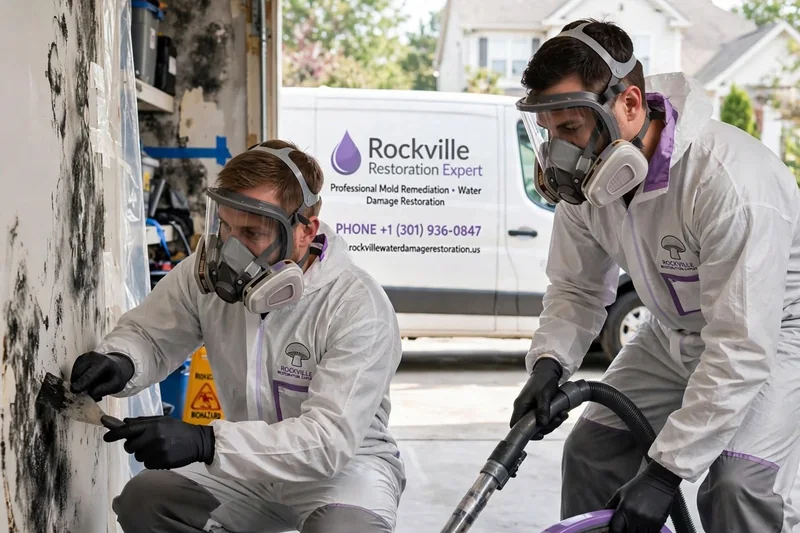
Mold does not grow on everything the same way. On drywall it spreads into the paper face, in carpet it settles into the padding, and in wood it works into the grain. Rockville Restoration Expert removes mold-affected materials, cleans what can be cleaned, and dries the building across Rockville, Maryland, so the moisture that fed the mold is dealt with and not just the stain you can see.
Estimates are free, and our line is open at any hour. Mold usually follows a leak, a flood, or a period of high humidity, so we also help trace what caused it.
- 24/7 Emergency Calls
- Free Estimates
- Licensed and Insured
Mold Is a Moisture Problem First
Mold needs moisture, and the U.S. Environmental Protection Agency says controlling moisture is the key to controlling it. Cleaning a patch without fixing the cause usually means the patch comes back. That is why our work starts with the question of where the water came from, and why drying is part of every mold job.
If a leak is still active, a plumber or roofer has to stop it first. If you are not sure where the moisture is coming from, water leak detection can help find it.
What Mold Looks and Smells Like
- Fuzzy, speckled, or slimy patches in colors that can include black, green, white, gray, or brown.
- A musty, earthy odor that gets stronger in a closed room.
- Staining that returns after you paint or wipe it.
- Warped, peeling, or bubbling surfaces where moisture is trapped.
- Damp or discolored areas around windows, pipes, vents, and in corners.
Color does not tell you what kind of mold it is or how risky it is, so we treat any visible growth as a sign of a moisture problem that needs attention.
Handle It Yourself or Call a Professional?
The EPA says a small mold area, about 10 square feet or less, can often be cleaned by the building occupant when the cause is clear and fixed. A professional is the better choice when:
- The affected area is larger than about 10 square feet.
- Mold followed sewage, floodwater, or other contaminated water.
- The mold is inside walls, ceilings, or the heating and cooling system.
- You cannot find the source of the moisture.
- Someone in the building has asthma, allergies, a weak immune system, or other health concerns. Talk to a doctor about health questions.
If you disturb mold, spores can spread, so avoid scrubbing or sanding dry growth and keep fans from blowing across it.
Do You Need Mold Testing First?
EPA guidance says routine sampling is generally not needed, because if you can see or smell mold you should deal with it. Testing can still help in special cases, such as a hidden problem or a dispute that needs documented results. Testing is usually done by an independent assessor, and our work is remediation, which means removing and cleaning.
What a Mold Remediation Job Includes
- Fix the moisture source. A plumber, roofer, or other trade stops the water first.
- Set up containment. We close off the work area to help keep spores from reaching clean rooms.
- Remove affected materials. Drywall, insulation, carpet, and padding that are moldy are cut out, bagged, and carried out carefully.
- Clean what can be cleaned. Framing and other solid surfaces are cleaned, and the area is vacuumed to pick up debris.
- Dry the space. Air movers and dehumidifiers bring moisture down, as on our structural drying and dehumidification page.
- Check the result. We confirm the area is dry and no visible growth remains, and we explain what repairs follow.
What Happens to Each Material
- Drywall: usually cut out if moldy, since mold grows into the paper and gypsum.
- Insulation: typically removed, because it holds moisture and is hard to clean.
- Carpet and padding: often discarded, especially when they stayed wet for long.
- Wood framing and subfloors: cleaned and dried, since solid wood can often be saved.
- Concrete and tile: cleaned and dried, since hard, non-porous surfaces do not feed mold.
- Books, paper, and fabric: frequently discarded when heavily affected, and we talk with you about items you want to keep.
Why Bleach Alone Does Not Solve It
Spraying bleach on mold may lighten the stain, but it does not remove the growth or fix the water that caused it. The EPA does not recommend routine use of biocides, and the agency's advice is to remove mold and correct the moisture. We clean and remove, and we do not rely on spray to hide the problem.
Where Mold Turns Up in Rockville Buildings
Basements and Crawl Spaces
Low, damp areas keep moisture longer than the rest of a building. After a flood, our basement water damage service dries them before mold takes hold.
Attics, Ceilings, and Roof Edges
Leaks from the roof can wet insulation and framing where no one looks. Our roof leak water damage page covers how those losses are handled.
Bathrooms, Kitchens, and Laundry Rooms
Showers, sinks, dishwashers, and washing machines create constant moisture. Slow leaks behind cabinets and under tubs can hide mold for months.
Condos and Apartments
Mold in one unit may be tied to a leak in a shared wall or a neighbor's plumbing. Tell your landlord or association early, and we document what we find.
Keeping Mold From Coming Back
- Fix leaks promptly and dry wet materials within a day or two.
- Keep indoor humidity below 60 percent, ideally between 30 and 50 percent, as the EPA advises.
- Use bathroom and kitchen exhaust fans, and vent them outdoors.
- Run a dehumidifier in damp basements.
- Clean up condensation on windows and pipes.
- Make sure gutters and downspouts carry water away from the building.
Mold Claims and Your Insurance
Policies often limit or exclude mold coverage, and coverage may depend on whether the water damage itself was covered. Photograph the mold, keep records of repairs, and ask your insurer early. We document what we find and what we remove. Coverage is your insurer's decision, and we cannot promise a claim will be paid.
Mold Remediation Across Rockville
We help with mold in Rockville Town Center, King Farm, Fallsgrove, Twinbrook, East Rockville, West End Park, Lincoln Park, Woodley Gardens, College Gardens, Hungerford, Potomac Woods, and the other neighborhoods in ZIP codes 20850, 20851, 20852, 20853, 20854, and 20855. Give us your street address when you call, and we will tell you whether we can reach it.