
Rockville Water Extraction and Removal: Clearing Standing and Soaked-In Water
An inch of water on a kitchen floor looks small, but it keeps moving: into the cabinet bases, under the flooring, and into the bottom of the walls. Rockville Restoration Expert removes standing and soaked-in water from homes, condos, and commercial spaces across Rockville, Maryland, so the rest of the repair starts with a smaller problem.
Our line is open day and night, and estimates cost nothing. If the water has not stopped yet, emergency water damage restoration is the right first read. This page covers what removal itself involves.
- 24/7 Emergency Calls
- Free Estimates
- Licensed and Insured
Where Extraction Fits in a Water Damage Job
Water removal is one step in a sequence, and it is almost always the first physical step once the area is safe. Here is the usual order.
- Make the area safe. We check for electrical hazards, slippery floors, and contaminated water before anyone starts work.
- Stop or confirm the source. The leak should be shut off, or a plumber should be on the way.
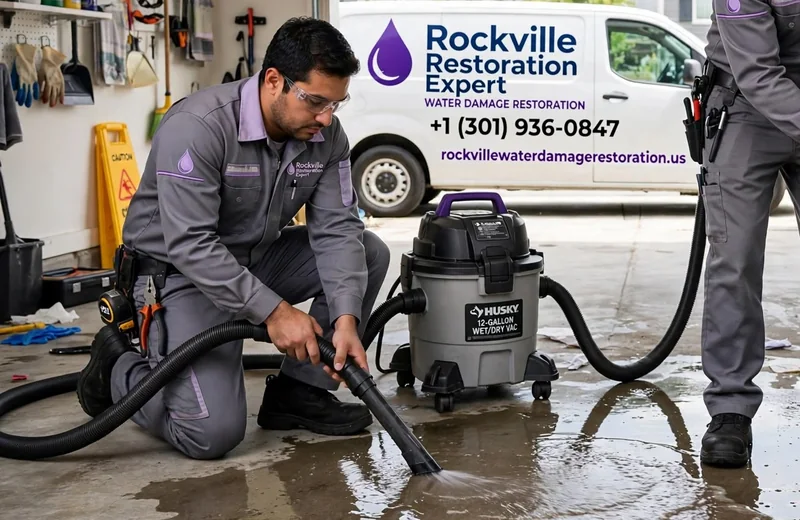
- Extract and remove the water. Pumps, extractors, and wet vacuums take out standing water and as much soaked-in water as they can reach.
- Measure what is left. Moisture meters show which floors, walls, and framing are still wet.
- Dry and clean. Air movers and dehumidifiers finish the job, and anything that cannot be saved is removed.
Three Questions That Decide How We Remove Your Water
No two floods are the same, so the first visit comes down to three questions.
How Deep and How Widespread Is It?
A shallow spill across one room can often be handled with extraction tools and wet vacuums. Deeper water, such as in a basement or a ground-floor unit, usually calls for pumps first so the bulk of it leaves quickly. We look at how far the water reached, including rooms next door and the floor below.
What Kind of Water Is It?
Water from a clean supply line is a different problem from water that has touched a drain, an appliance, or the outdoors. The industry sorts water into categories by how contaminated it is, and that decides the gear we wear and how materials are treated afterward. Sewage is its own case, and our sewage backup cleanup page explains how it changes the job.
What Is the Water Sitting On?
Carpet, padding, hardwood, laminate, vinyl, tile, and concrete each hold water differently. A concrete slab behaves nothing like a wood subfloor, and we match the tool and the technique to the surface so we do not push water deeper into it.
The Equipment We Use to Remove Water
- Submersible pumps move large volumes of standing water out of basements and low rooms.
- Extractors pull water out of carpet and padding after the standing water is gone.
- Wet vacuums handle puddles, corners, and tight spaces that larger tools cannot reach.
- Extraction wands work across hard floors and carpet to lift what is left on the surface.
- Moisture meters confirm what the eye cannot, so we know where water remains.
What Happens to Carpet, Padding, and Flooring
- Carpet: often worth saving if clean water is removed quickly, but not if the water was contaminated.
- Carpet padding: holds a lot of water and is frequently replaced, even when the carpet stays.
- Hardwood: can swell, cup, or buckle, so we check how much moisture is in the boards and the subfloor.
- Laminate and vinyl plank: water can slip under the edges, and these floors may have to come up to dry.
- Tile and concrete: usually handle water well, though the subfloor and grout lines need checking.
We tell you what looks salvageable, and we do not promise a result until we have measured.
Standing Water in Rockville's Homes and Buildings
The way water collects depends on the building, so the removal plan does too.
Basements and Ground-Level Rooms
Heavy rain, a failed sump pump, or a leaking water heater can fill a basement. The pump comes first, then extraction of whatever has soaked into carpet or padding, then a check along the walls where water settles. Our basement water damage page describes the rest of the work.
Condos and Apartments
Water in one unit often travels to the floor below or the wall next door. We check connected spaces, work with building management on access and shutoffs, and keep a record of where the water went.
Shops and Offices
Standing water on a commercial floor stops business and creates a slip hazard. We plan removal around your hours when we can, and we keep staff and customers clear of wet areas.
Safety Before the Water Comes Out
- Skip the household vacuum. Standard vacuums are not made for water, and mixing water and electricity is dangerous.
- Stay out of water near cords or outlets. Only use the breaker if the panel is dry and reachable.
- Watch the ceiling. A bulging or sagging ceiling can hold a lot of water and may fall.
- Keep children and pets out. Dirty water and slippery floors are risks for them.
- Photograph before you move things. Records help with your insurance claim.
Quick Answers About Water Removal
Do I Need a Pump, or Will a Wet Vacuum Do?
It depends on how much water there is. A shallow spill may only need a wet vacuum, while deeper water needs a pump. We choose after we see the room.
Can a Shop Vacuum Handle It?
A shop vacuum may take up a small puddle, but it will not reach the water in carpet padding or under flooring, which is where most of the damage grows. Water left behind can turn into mold, and the EPA recommends drying wet materials within a day or two.
What if the Water Already Soaked In?
Water does not have to be standing to cause damage. If floors feel spongy, baseboards are darker, or the carpet squishes, ask for an inspection. We use moisture readings to find water you cannot see.
What if the Water Came From the Unit Above Mine?
Take photos, tell your property manager or association, and call us. We can remove the water in your space while the building handles the source.
After the Water Is Out
Removal is not the end. Once the floors are clear, we measure what remains and move to structural drying and dehumidification so the framing, subfloor, and walls reach a dry state. For the drying stage we draw on ideas from ANSI/IICRC S500, the standard the industry uses for water damage work.
Water Removal Across Rockville Neighborhoods
We remove water from properties in East Rockville, Montrose, New Mark Commons, Twinbrook Forest, Rockshire, Fallsmead, Potomac Woods, North Farm, Hungerford / Stoneridge, and the rest of Rockville, including street addresses in ZIP codes 20850, 20851, 20852, 20853, 20854, and 20855.
Call Us Before the Water Spreads Further
Describe where the water is, roughly how deep it is, and what caused it, and we will walk you through our recommendation. If you see sewage or smell gas, stay out and call for help right away.